|
|
|
The very specific construction of the harmonica,
played both by blowing and inhaling, generates,
between skilled hands, a very particular phrasing
mixing sensitivity and swing...
|
|
|
 67 seconds 
|
Chuck Darling, Blues Birdhead and other jug band harpists were playing
jazz before the invention of the chromatic.
Five Harmaniacs Jug Band
"What makes my baby cry" |
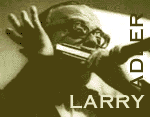 |
In 1938, Larry Adler cuts four swing tunes
with Django Reinhardt.
Don Les, the Harmonicats bass player, is also heard to be a swinging improviser on the
Marine Band. |
|
Since the 50's, the Belgian virtuoso " Jean Toots "
Thielemans is the undisputed king of the jazz harmonica. The quality of his
improvising, the warmth of his tone and his exceptional musicality remain unequaled.
Younger harmonicists are following the " footprints " of the master :
William Galison, Hendrik Meurkens, Thierry Crommen, Olivier Ker Ourio... |
 |
Toots Thielemanns «Footprints»
(Emarcy)
Toots Thielemanns & Bill Evans «Affinity»
(Warner) |
|
Even if he is not considered a
"jazzman ", one has to mention Stevie Wonder, who plays the hottest
chromatic work of the end of this century!
Stevie Wonder « Eivets Rednow »
(33T Vynil Collector) |
New school of the
diatonic
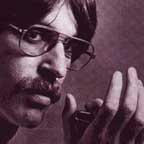 |
Harmonica player Pick Boy discovered the first
overblow of recorded harmonica history on the 1929 recording of Blues Birdhead's
"Mean Low Blues". But the real initiator of this technique is the American
pianist harmonicist Howard Levy.
He completely mastered the precision and the expressivity of the overblows and overdraws,
transforming the 10 holes of the diatonic harmonica into a fully chromatic instrument with
over three octaves. He is truly the leader of the modern school of harmonica. |
|
Howard Levy «Harmonica Jazz»
Howard Levy «Trio Globo»
(Silver Wave Rec.) |
|
|
|