|
 Rural music in the southeastern United States at the turn of
the century showcases an interesting variety of harmonica styles.
|
| The birth of the
cross harp style |
The first harmonica recordings reflect at
least two major trends : the first, very structured and melodic, was mostly used for
popular and dance tunes. It is often played in the higher register, the one that produces
the most volume.
The second style is rougher, more rhythmic, emphasizing expression and
atmosphere. It imitates the sounds of rural daily life: children and animal screams,
hunting calls, the roar of the train and its whistle. It is mostly played solo on the low
drawn notes which the musician bends. |
 67 secondes 
|
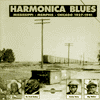
- Harmonica Blues
(Frémeaux FA 040) |
Sonny TERRY :
a bridge between styles |
Blind harmonica player Sonny Terry was not
only a virtuoso of the instrument but truly a bridge between different styles : from his
rural origins at the beginning of the century, to his meeting with Southeastern bluesman
Blind Boy Fuller, and his long complicity with New York folk artists. His solo works for
the label Folkways are pure masterpieces : Lost John, Locomotive Blues, Fox Chase...
|
 56 secondes
|
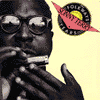
Sonny Terry «The Folkways Years»
(SF 400231)
et aussi :
The Great Harp Players (Document DOCD 5100)
Harmonica Masters (Yazoo 2019)
Harmonica Blues (Yazoo 1053)
|
| Memphis, the large
harbor on the Mississippi river, was an important crossroads for bluesmen in the 20's |
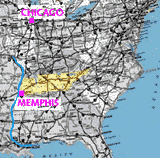 Harmonica players joined
the numerous "spasm bands" that haunted the streets of the city: Will Shade with
the Memphis Jug Band, Noah Lewis with the Cannon Jug Stompers... The tradition of
harmonica playing lasted a long time in Memphis, from one man bands Doctor Ross and
Joe Hill Louis to the polished Junior
Parker.
Before Elvis, producer Sam
Phillips will record the raucous Howling Wolf and
the very talented Big
Walter Horton, who is known as having the most beautiful tone in blues
harp history! |
|
|
| Sonny Boy Williamson
II : powerful and sensible
|
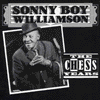 Aleck Miller was better known as Sonny Boy Williamson, a name
"borrowed" from the original Bluebird recording artist! He teamed up with Robert
Johnson, B.B. King and Elmore James among others. He also emceed a daily radio program for
forty years and toured successfully in Europe, often backed by famous British rock groups.
For me, he is the most sensitive of all the singer/harmonica players ever recorded. His
voice and the instrument melt together in his unique style. |
 70 secondes
|
Sonny Boy Williamson
«The Chess Years»
(MCA) --- ci-dessus«King Biscuit Time»
(Arhoolie) --- ci-contre |
|
James Cotton was one of his disciples before
joining the Muddy Waters Blues Band and enjoying a long career of his own.
James Cotton «100 % Cotton»
(Sequel NEX cd 214)
Big Walter Horton with Carey Bell
(Alligator ALCD 4702)
|
| Chicago 1930/1960 |
During this period, the most inventive
harmonica players recorded in the Windy City, from John Lee «Sonny Boy» Williamson to Jimmy Reed. |
 45 secondes
|
Sonny Boy Williamson 1
( coffret 2 cd Frémeaux) |
| The Muddy Waters band
hosted the cream of the harp players of the Chicago Blues era |
Confronted with the higher volume level of the
new urban Blues, some musicians began to amplify the harmonica through cheap mikes and
amps.
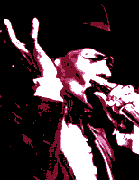
One of them, Marion «Little
Walter» Jacobs, tamed the new resonances one could get with this
equipment to become one of the most inspired soloists of blues history. |
|
Little Walter
(MCA)
Junior Wells «Hoodoo
Man Blues»
(Delmark)
Georges Smith «Harmonica Ace»
(Ace) |
Today :
Texas and West Coast |
Contemporary harmonica Blues flourish both in Texas (Kim
Wilson) and on the West Coast (William Clarke, Paul Delay, Charlie Musselwhite…). |