Musicians call the minor third, the flatted fifth and the minor seventh, blue notes.
For example, in C: Eb, Gb and Bb.
Using these degrees will give a bluesy feeling, especially on Major chords. The tuning of
the harp is particularly well suited to produce these notes with a pronounced blues
inflection.By drawing in the first five holes of a Marine Bandin C you play a G7 chord,
and get the easiest blue note on the diatonic : the minor seventh (F = fifth hole drawn).
In cross harp style, on a C harp, we often play the blue notes in the key of G. The
minor third is the third hole (B) bent a semitone (Bb). The flatted fifth is the fourth
hole (D) bent a semitone (Db).
Let's listen to the whole blue scale in G : G Bb C Db D F and G. |
| The blues scale 
|
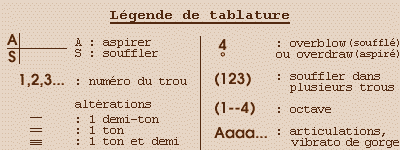
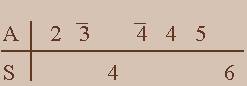 |
| a well known riff... |
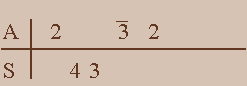 |
|
|
| Look at your C harp tuning chart and track all the
possibilities you have to obtain these notes naturally , by bending or by overblowing. Now,
on your C harp, look for the blue scales in D, E & A, then C, B & F. You can
figure them out by the intervals between the notes.
You'll soon be discovering new tricks on your own.
Harply yours... |
|