Thomas Milteau young


JJM Hanbooks

The harmonica can be a great buddy, you just
have to get to know it...
In the following pages, you will find :
the tip
of the month
some basic
notions


A good harmonica course should be adapted to the musical level of the student (See our "Methods" page ).
In SCHOOOOOL we will talk about :

  • the choice of harmonica

  • the anatomy of the harmonica

  • the first steps

  • bending on the diatonic harmonica

  • basic music theory

  • pieces to work on

  • an introduction to improvisation

  • advanced level techniques

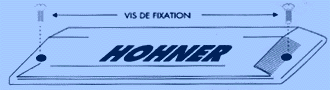
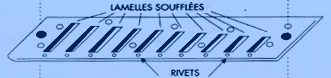
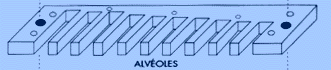
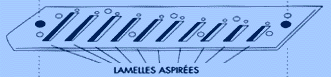
In introduction, and to satisfy your curiosity, we'd like to present the anatomy
of the harmonica, low notes on the left:

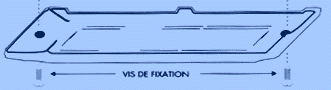
top cover
plate
Top cover plate
blow reed
plate
Blow reed plate
comb
Comb
draw reed
plate
Draw reed plate
bottom cover
plate
Bottom cover plate
How does a harp work ?

Each hole gives access to two notes : one blown note, and one drawn note.
These notes are produced by metal reeds that vibrate when the air passes over them. The pitch of a note does not depend on how strongly you breathe.
But you can modify the original note by changing the shape of your mouth.
Harmonica players call this technique " bending " the note.

The faster a reed vibrates, the higher the note
The slower it vibrates, the lower the note. The pitch of a note does depend on the length of the reed, but even more on the weight of the end that vibrates.

Basic notions | Tip of the month | Map